No products in the cart.
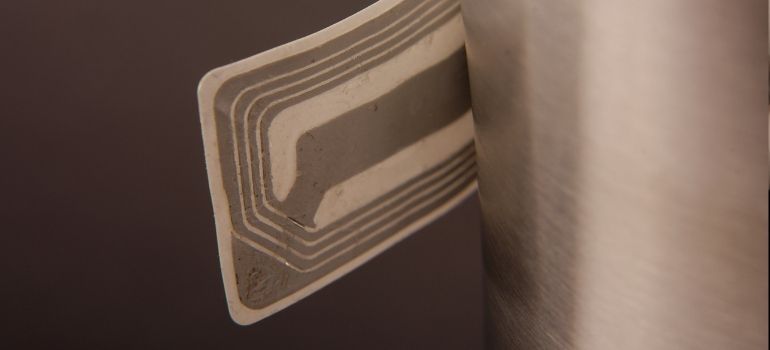
RFID (Radio Frequency Identification) tags are manufactured using modern technology and have found a wide range of applications across various industries. In this article, we will examine the production process of RFID tags, the technologies used, and the quality control stages.
1. RFID Tag Components
RFID tags consist of three main components:
- Microchip: A component inside the tag that performs the data storage function. Each tag has a unique identification number.
- Antenna: A component that enables communication between the RFID reader and the tag. The antenna receives radio waves and transmits the data to the microchip.
- Surface Material: This is the outer coating of the RFID tag. It is usually made of materials such as paper, plastic, or polyester.
2. Production Stages
A. Design: The production process of RFID tags begins with the design phase, based on the required specifications. The design determines the tag’s size, shape, and the materials to be used.
B. Microchip Production: Microchips are usually produced in semiconductor factories. At this stage, the characteristics of the microchips are determined according to the capacity and processing power required by the tag.
C. Antenna Production: Antennas are usually produced using copper or aluminum foil. The antenna design affects the tag’s reading distance and performance.
D. Tag Assembly: One of the most critical stages of the production process is tag assembly. The microchip and antenna are combined using special machines. The tag is then coated with surface material.
3. Quality Control
The quality control stage is crucial in the production of RFID tags. At this stage, the functionality, read range, and durability of the produced tags are tested. Quality control processes include the following:
- Function Tests: The ability of the tags to communicate via radio waves is checked.
- Reading Distance Tests: The performance of the tags at different reading distances is tested.
- Durability Tests: The durability of the tags against environmental conditions, heat, humidity, and chemicals is tested.
4. Application Areas
RFID tags are used in many industries. These include:
- Retail: Stock tracking and inventory management.
- Logistics: Supply chain management and asset tracking.
- Healthcare: Tracking medical devices and patient safety.
- Automotive: Part tracking and vehicle tracking.
- Event Management: Participant tracking and data analytics.
The RFID tag production process is a complex process that utilizes advanced technologies. Tags, which consist of a microchip, antenna, and surface material, are effectively used in various industries and facilitate operations. Quality control stages ensure high performance and reliability, allowing the best possible use of the advantages offered by RFID technology.