No products in the cart.
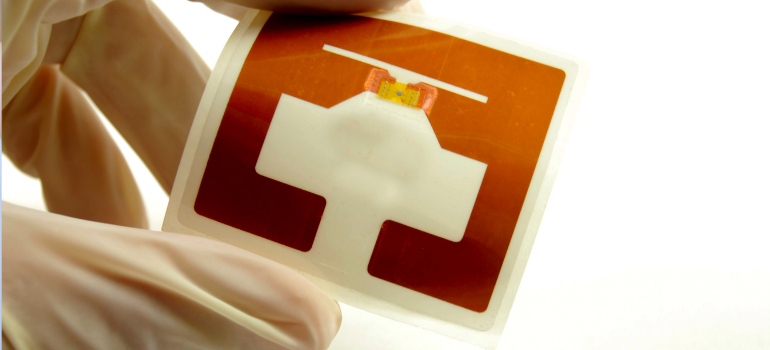
Why Should You Use UHF RFID Tags?
UHF (Ultra High Frequency) RFID tags are a preferred technology in many industries, particularly due to their long read ranges and fast data transmission. Operating in the 860-960 MHz frequency range, UHF RFID offers efficient solutions for various applications. So, why are UHF RFID tags so popular? Let’s take a closer look at their technological advantages and disadvantages.
Technological Advantages of UHF RFID Tags
- Long Reading Range: One of the most significant advantages of UHF RFID tags is that they offer a long reading range. UHF tags can provide a reading distance of up to 10 meters, which is ideal for applications such as warehouse management, logistics, and asset tracking.
- Fast Data Transmission: Thanks to its high data transmission speed, UHF technology can read multiple tags simultaneously. This feature greatly facilitates inventory counting and large-scale tracking operations.
- High Performance: UHF RFID tags can continue to perform even in challenging conditions such as metal and liquid. Specially developed UHF tags work more effectively on such surfaces, offering a wide range of applications.
- Comprehensive Application Area: UHF RFID technology can be used in many sectors, including retail, logistics, supply chain, healthcare, and transportation. It is particularly suitable for businesses with large-scale tracking needs.
Disadvantages of UHF RFID Tags
- Shorter Wavelength: UHF signals can be more easily blocked by surfaces such as metal and liquids. Therefore, special tags may be required to operate in such environments.
- High Cost: UHF RFID tags and readers can be more expensive compared to other low-frequency RFID systems. However, considering the advantages they offer in large-scale operations, this cost is generally acceptable.
- Regulations: The frequency range in which UHF RFID operates is subject to regional regulations. Different frequencies may be used in different countries, which can create additional challenges in global operations.
UHF RFID Applications
- Warehouse and Logistics Management: Offers ideal solutions for inventory tracking and warehouse operations thanks to its high read range and fast data processing.
- Retail Sector: Used for store inventory management, product security, and tracking applications.
- Healthcare Sector: Used in applications such as surgical instrument tracking, patient safety, and medication monitoring.
- Transportation and Logistics: Preferred for applications such as vehicle tracking, ticketing, and parking lot management.