No products in the cart.
RFID (Radio Frequency Identification) technology is widely used in many sectors, from retail to logistics and healthcare. Understanding how RFID tags work is important for grasping the advantages this technology offers. Here are details about the operation, components, and working principles of RFID tags:
Overview of RFID Technology
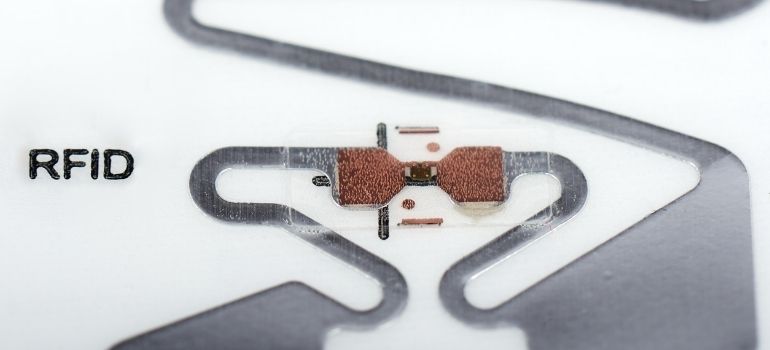
RFID technology uses electromagnetic fields to automatically identify and track objects. RFID tags consist of microchips and antennas with the ability to store and transmit data.
Components of RFID Tags
- Microchip: The microchip at the center of the RFID tag stores unique identification information. Depending on the application, this information can be serial numbers or more comprehensive data.
- Antenna: The antenna establishes communication between the RFID tag and the reader. It receives signals from the reader and uses them to power the microchip and transmit data to the reader.
How RFID Tags Work
- Powering the Tag:
- Passive Tags: These tags operate using energy from the reader. The energy is used to power the microchip and transmit data.
- Semi-Passive Tags: These tags have a built-in battery that helps power the microchip, but they still require energy from the reader to transmit signals.
- Active Tags: These tags have their own power source and can transmit signals over longer distances.
- Communication with the Reader:
- An RFID reader transmits radio waves at a specific frequency. The antennas of nearby RFID tags receive this energy and activate the microchip. The tag modulates the radio waves and sends the data back to the reader.
- Data Transmission:
- The reader receives the modulated radio waves and decodes the data from the RFID tag. This data may include product information, inventory status, or other details stored on the microchip.
Applications of RFID Technology
RFID technology is widely used in areas such as inventory management, supply chain logistics, access control, and asset tracking. It is also effectively used in contactless payment systems and various other applications. The versatility and efficiency of RFID make it a valuable tool for streamlining operations and enhancing security across many industries.
Ultimately, RFID tags work through the interaction between microchips, antennas, and reader devices. This enables objects to be identified and tracked seamlessly. RFID technology continues to revolutionize many areas of modern society.