No products in the cart.

One of the cornerstones of success in the e-commerce sector is effective inventory management and fast delivery processes. In this highly competitive field, responding quickly and accurately to customer demands plays a critical role in a brand’s success. This is where RFID (Radio Frequency Identification) technology comes into play. How does RFID enable inventory management and fast delivery in e-commerce? In this article, we will explore the advantages RFID offers in the world of e-commerce.
What is RFID Technology?
RFID is a technology that enables a reader to detect information embedded in a tag via radio waves. The use of RFID in e-commerce revolutionizes product inventory tracking and delivery processes, enabling faster and more accurate results compared to manual processes.
The Benefits of RFID for Inventory Management
- Real-Time Inventory Tracking: Products can be tracked in real time at every stage, from warehouse shelves to the checkout, using RFID tags. This enables e-commerce businesses to access instant stock status information and prevents customer losses due to inaccurate inventory data.
- Preventing Stock Loss: RFID technology makes it easy to identify lost or misplaced products. Knowing where products are in the warehouse at any given moment reduces stock losses and enables efficient use of products.
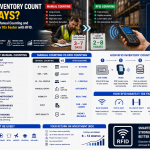
- Accelerating Inventory Updates: Compared to traditional barcode systems, inventory counting is much faster with RFID. An RFID reader can perform a fast and accurate inventory count by detecting multiple tags simultaneously. This saves time, especially for large-scale e-commerce businesses.
- Efficient Warehouse Management: Warehouses can be organized more efficiently thanks to RFID technology. The placement and movement of products within the warehouse can be tracked automatically, increasing labor efficiency. Additionally, errors such as incorrect product shipments are minimized.
Fast Delivery with RFID
E-commerce customers expect their orders to be delivered as quickly as possible. RFID technology increases customer satisfaction by speeding up delivery processes.
- Fast Order Preparation: RFID allows the location of ordered products to be quickly identified. Products can be easily located within the warehouse, speeding up the packaging process. This ensures orders are prepared quickly.
- Accurate Product Delivery: Products packaged with RFID tags undergo a final check to ensure the order is correct. This minimizes errors such as incorrect product delivery and ensures customer satisfaction.
- Improved Shipping Process: Packages can be tracked throughout the shipping process using RFID. Products loaded onto delivery vehicles are verified using RFID readers, preventing incorrect deliveries. Additionally, customers receive real-time updates throughout the delivery process, allowing them to track the status of their order.
Disadvantages of RFID in E-Commerce
- High Initial Cost: RFID systems can be costly to set up initially. However, the long-term efficiency gains, error reduction, and labor savings offset these costs.
- Technological Compatibility Issues: Small businesses, in particular, may struggle to make their existing systems compatible with RFID technology when transitioning to it. This can increase integration costs.
The Future of E-Commerce with RFID
RFID technology will continue to play a major role in the future of the e-commerce sector. As expectations for fast delivery increase and inventory management becomes more complex, RFID systems will provide e-commerce businesses with a competitive advantage. Real-time tracking of product movements within warehouses and delivery processes will increase operational efficiency for businesses while also maximizing customer satisfaction.