No products in the cart.

Automatic identification is a general term for technologies that enable the identification of objects. Automatic identification is often defined in conjunction with automatic data collection. It is used to identify assets, gather information about them, and compile this collected data in a computer system without manual counting.
The purpose of automatic identification systems is to increase efficiency, reduce data entry errors, and allow personnel to be used for more valuable tasks other than manual counting. There are many technologies under the umbrella of automatic identification. These include barcodes, smart cards, voice recognition, some biometric technologies (retinal scanning), optical character recognition, and radio frequency identification.
What is RFID?
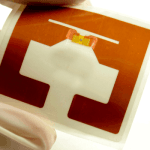
Radio Frequency Identification (RFID) is the general name given to technologies used to identify living beings or objects using radio waves. There are many forms of identification, but the most common one involves a microchip (called an RFID tag) attached to an antenna that identifies a living being or object. Other information can also be added to the tag to make identification more distinct. The antenna enables the chip’s identification information to be transmitted to a reader. The reader converts the radio waves received from the RFID tag into digital information, enabling it to be transferred to a computer system, where it becomes useful.
Which is Better?
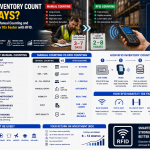
RFID and barcodes are two different technologies, and although their applications sometimes appear similar, they are distinct. The biggest difference is that barcodes use “line-of-sight” technology. This means that a scanner must be able to see the label in order to read the barcode. Therefore, users must hold the scanner up to the barcode to read it. RFID does not require line-of-sight technology. RFID tags can be read as long as they are within range of the RFID reader. Barcodes have other disadvantages as well; if the barcode label is accidentally scratched, damaged, or torn, it becomes impossible to read. Furthermore, standard barcodes only identify the manufacturer and the product. They do not identify the object itself. In other words, they do not provide detailed information about the scanned product. A barcode on a milk carton is no different from any other barcode. It is impossible to know the expiration date of the milk in this way. RFID tags can meet all these requirements.