No products in the cart.
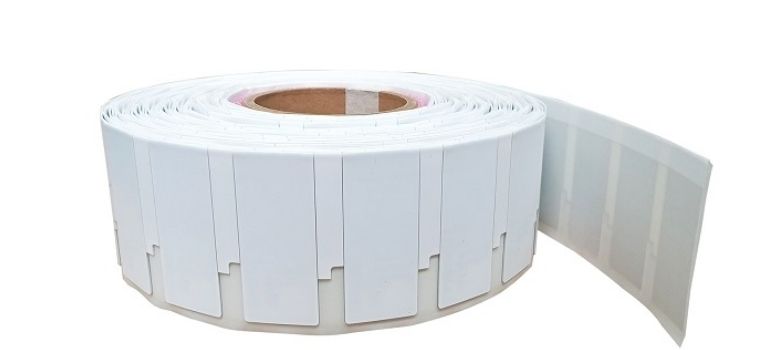
While RFID technology offers significant advantages in inventory management and tracking systems, metal surfaces can affect the performance of RFID tags. Since metal surfaces can have a negative impact on the signal transmission of RFID tags, it is crucial to select UHF RFID tags specifically designed for such surfaces. Here are the key factors to consider when selecting UHF RFID tags for metal surfaces:
Label Type and Design
UHF RFID tags for metal surfaces must have a different design compared to standard tags. These tags are typically manufactured with special materials and antenna designs that minimize signal loss when adhering to metal surfaces. On-metal RFID tags are specifically developed for use on these types of surfaces.
Signal Reflection and Interference
Metal surfaces can reduce tag performance by reflecting radio frequency signals. Therefore, tags used on metal surfaces must have an antenna structure that minimizes signal reflection. To prevent interference caused by metal, a UHF RFID tag that operates in the correct frequency range and has a strong antenna structure should be selected.
Distance and Reading Range
When selecting UHF RFID tags for metal surfaces, it is important to consider the distance at which the tag will communicate with the reader. Since tags close to metal surfaces can cause signal attenuation, tags with long-range reading capability should be preferred. UHF tags typically have a reading range of up to 10 meters, but this distance may vary depending on the metal surface.
Environmental Resilience
RFID tags for metal surfaces are commonly used in industrial settings. Therefore, the tag must be durable and resistant to harsh environmental conditions (temperature, humidity, chemicals). Tags with high durability ratings such as IP67 or IP68 ensure long-term use in challenging environments.
Ease of Installation and Application
The installation of RFID tags for use on metal surfaces is also quite important. Adhesive-based or screw-mounted tag options are available. Adhesive tags provide quick and easy installation, while screw-mounted options offer a more secure and permanent installation. Choosing the installation option suitable for the application area increases usage efficiency.
rfiddepo.com's Solutions
rfiddepo.com offers a wide range of UHF RFID tags that deliver high performance on metal surfaces. Manufactured with special antenna designs that optimize signal transmission and durable materials, these tags enable high-accuracy data reading even on metal surfaces. You can get support from rfiddepo.com when selecting the most suitable tags for metal surfaces in your RFID solutions.
When selecting UHF RFID tags for metal surfaces, it is crucial to consider factors such as signal performance, read range, durability, and ease of installation. By using tags designed to minimize the effect of metal on RFID signals and for the right applications, maximum efficiency can be achieved in inventory and asset management processes. rfiddepo.com simplifies your operations by offering you the best solutions for this process.